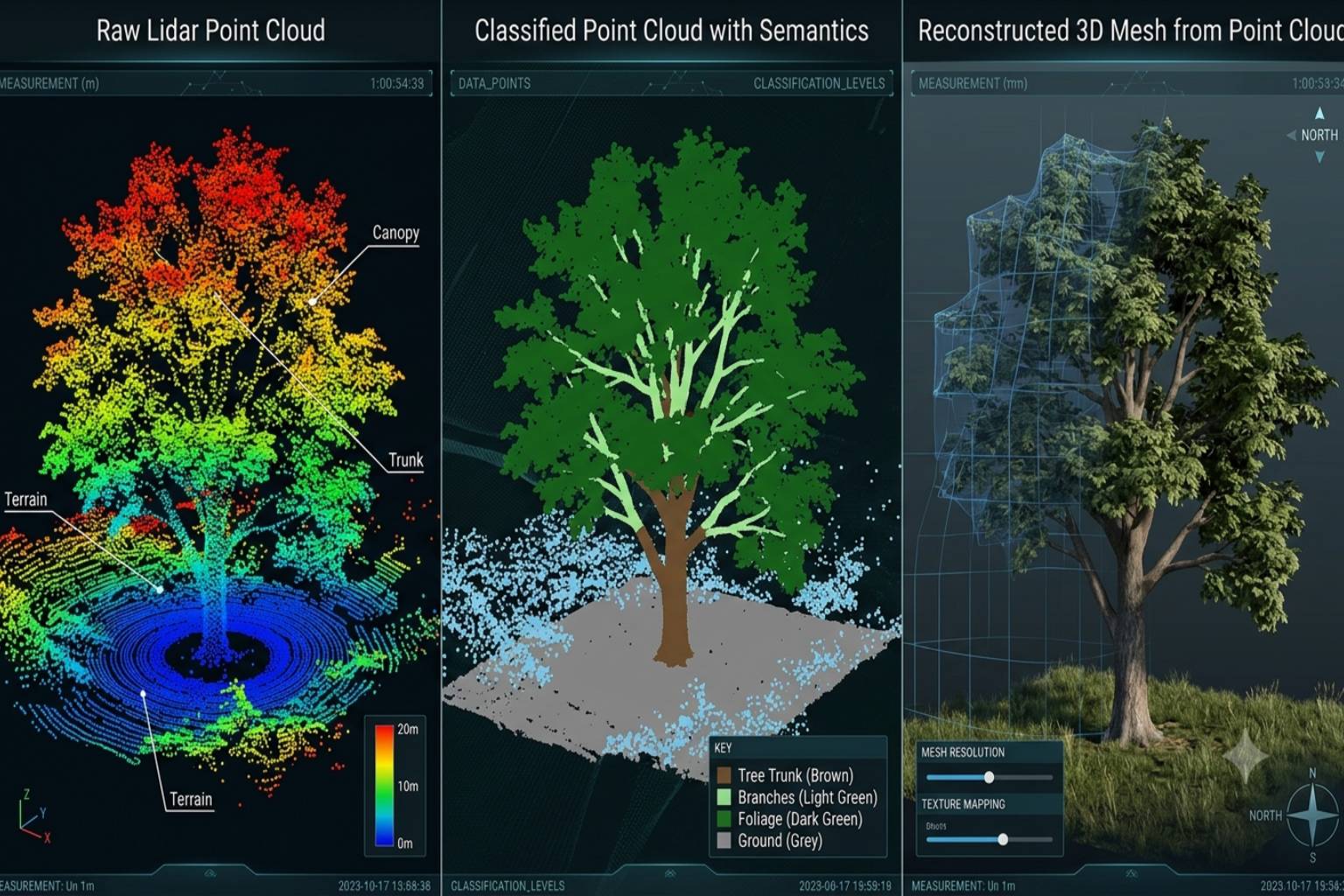
The architecture, engineering, and construction (AEC) industry is rapidly embracing digital transformation, and one of the most impactful innovations is Point Cloud to BIM. This process converts highly accurate 3D scan data into intelligent Building Information Modeling (BIM) models, enabling architects, engineers, contractors, and facility managers to work with precise digital representations of existing structures.
Whether renovating an aging building, managing complex infrastructure, or planning a large-scale construction project, Point Cloud to BIM provides the accuracy and efficiency needed to make informed decisions throughout the project lifecycle.
Why is Point Cloud needed?
Point Cloud to BIM is the process of transforming laser-scanned or photogrammetry-generated point cloud data into a detailed BIM model. A point cloud consists of millions of data points captured from a physical environment, representing the exact geometry of buildings, structures, and surrounding elements.
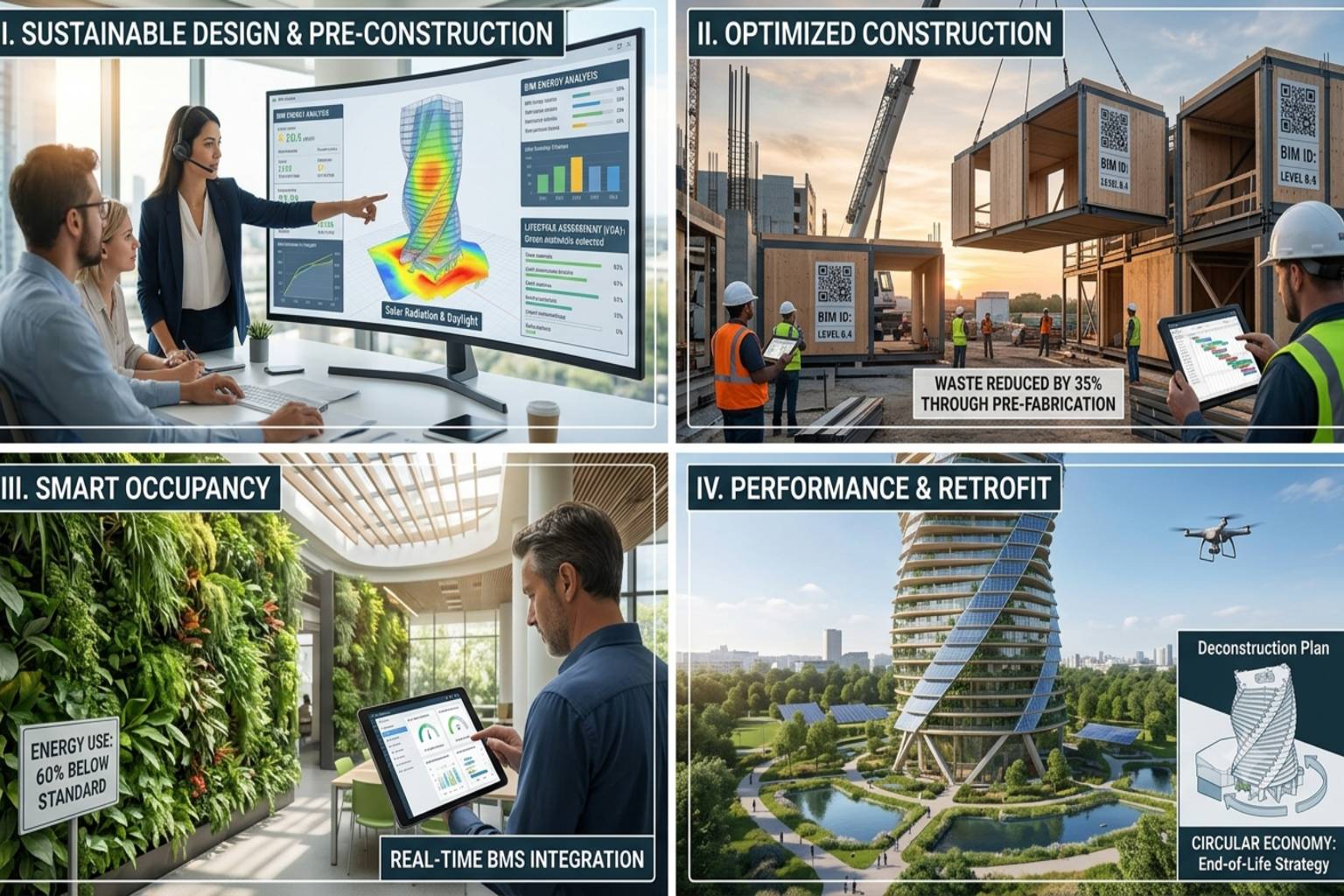
✅ Reduced Material Waste
Accurate quantity estimation and clash detection minimize unnecessary material usage and construction errors.
BIM enables energy analysis and performance simulations to optimize building design for lower energy consumption.
Digital coordination improves planning, scheduling, and resource allocation, reducing project delays and operational waste.
BIM supports facility management with accurate asset information, helping maintain buildings efficiently throughout their lifecycle.
Efficient planning, reduced rework, and optimized construction processes contribute to lower carbon emissions.
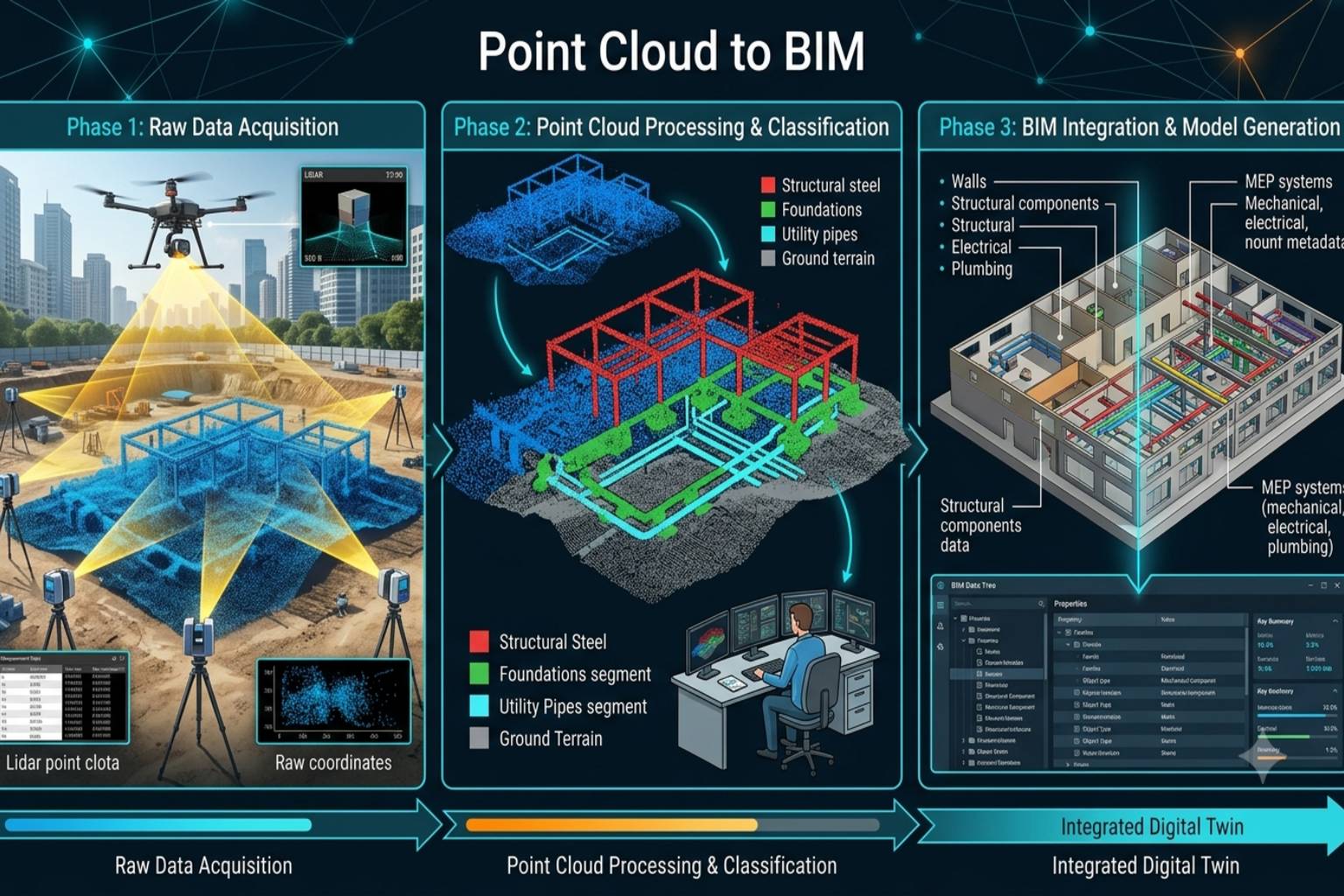
How Does the Point Cloud to BIM Process Work?
Traditional surveying methods can introduce measurement errors. Point Cloud to BIM captures precise site conditions, significantly reducing inaccuracies and design conflicts.
Benefits of BIM in Sustainable Construction
- Faster Project Delivery
- Improved Renovation and Retrofit Planning
- Better Clash Detection
- Cost Savings
- Efficient Facility Management
- Building Renovation and Remodeling
- Historic Building Preservation
Faster Project Delivery Accurate existing-condition models minimize rework and streamline design, coordination, and construction processes.
For renovation and restoration projects, having an accurate BIM model of existing conditions allows stakeholders to identify potential issues before construction begins.
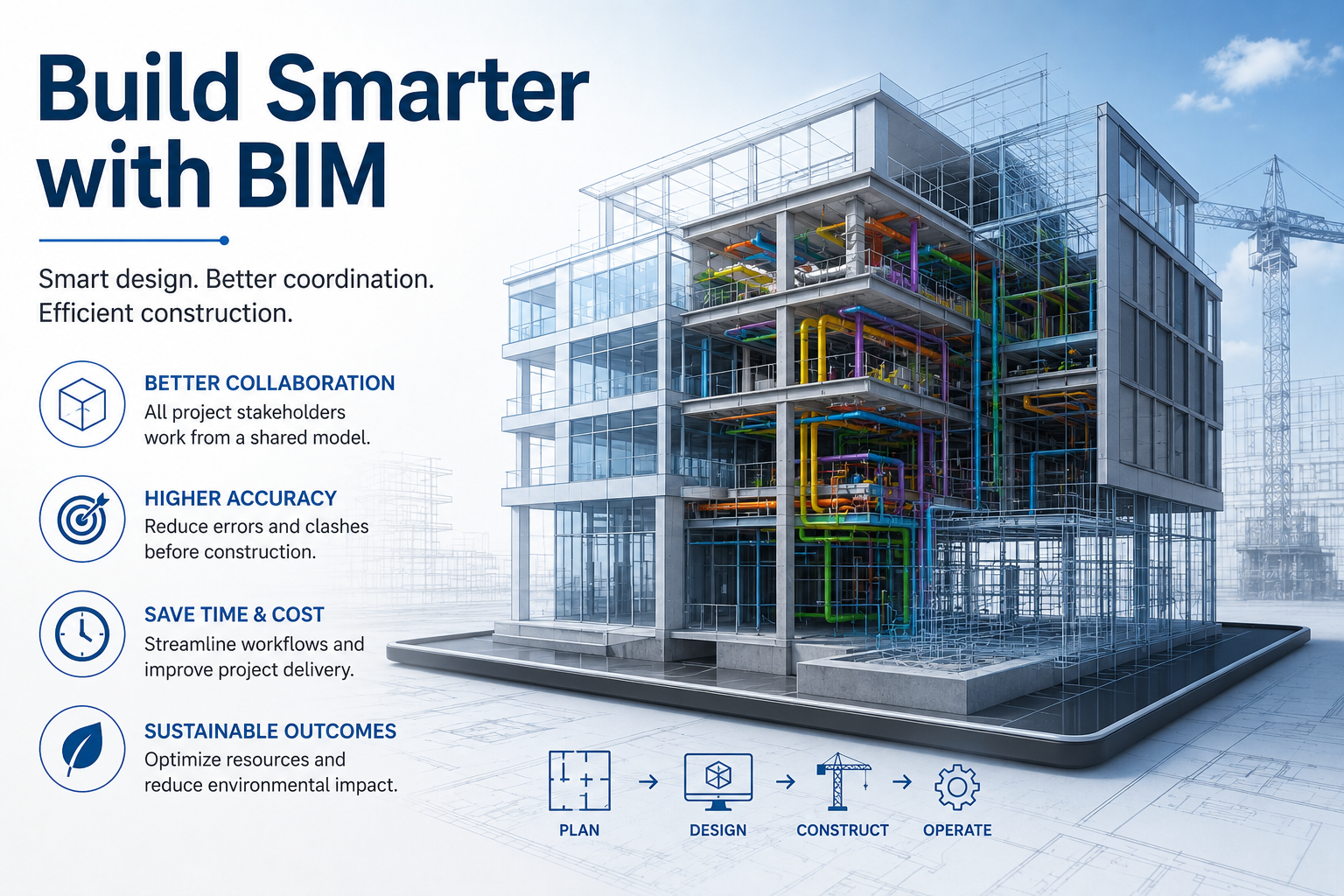
Intelligent BIM models enable project teams to perform clash detection, reducing costly on-site conflicts among architectural, structural, and MEP systems.
Accurate modeling reduces material waste, minimizes design revisions, and lowers overall project costs.
Owners and facility managers can use BIM models for maintenance planning, asset tracking, and lifecycle management long after project completion.
Point Cloud to BIM helps architects and engineers accurately document existing structures before initiating renovation projects.
Heritage structures often require detailed documentation. Point Cloud technology captures intricate architectural details, enabling precise restoration and preservation efforts.
Selecting the appropriate LOD depends on project objectives, budget, and intended use of the BIM model.
Challenges in Point Cloud to BIM
While the benefits are significant, several challenges may arise:
- Large file sizes requiring powerful computing resources
- Complex geometry in historic or irregular structures
- Data gaps due to inaccessible scanning areas
- Need for skilled BIM professionals to interpret scan data accurately
- Maintaining accuracy across large-scale projects
Proper planning, advanced software tools, and experienced BIM specialists help overcome these challenges effectively.
Conclusion
Point Cloud to BIM has become an essential solution for modern construction, renovation, infrastructure, and facility management projects. By converting reality-capture data into intelligent BIM models, project teams can achieve higher accuracy, reduce costs, improve coordination, and deliver better project outcomes.
As reality-capture technologies and BIM workflows continue to evolve, Point Cloud to BIM will play an increasingly important role in creating smarter, more efficient, and sustainable built environments.
As construction projects become more complex, the demand for accurate existing-condition documentation continues to grow. Point Cloud to BIM bridges the gap between the physical and digital worlds by transforming real-world environments into intelligent, data-rich BIM models.
Leave a Reply
Your email address will not be published.